
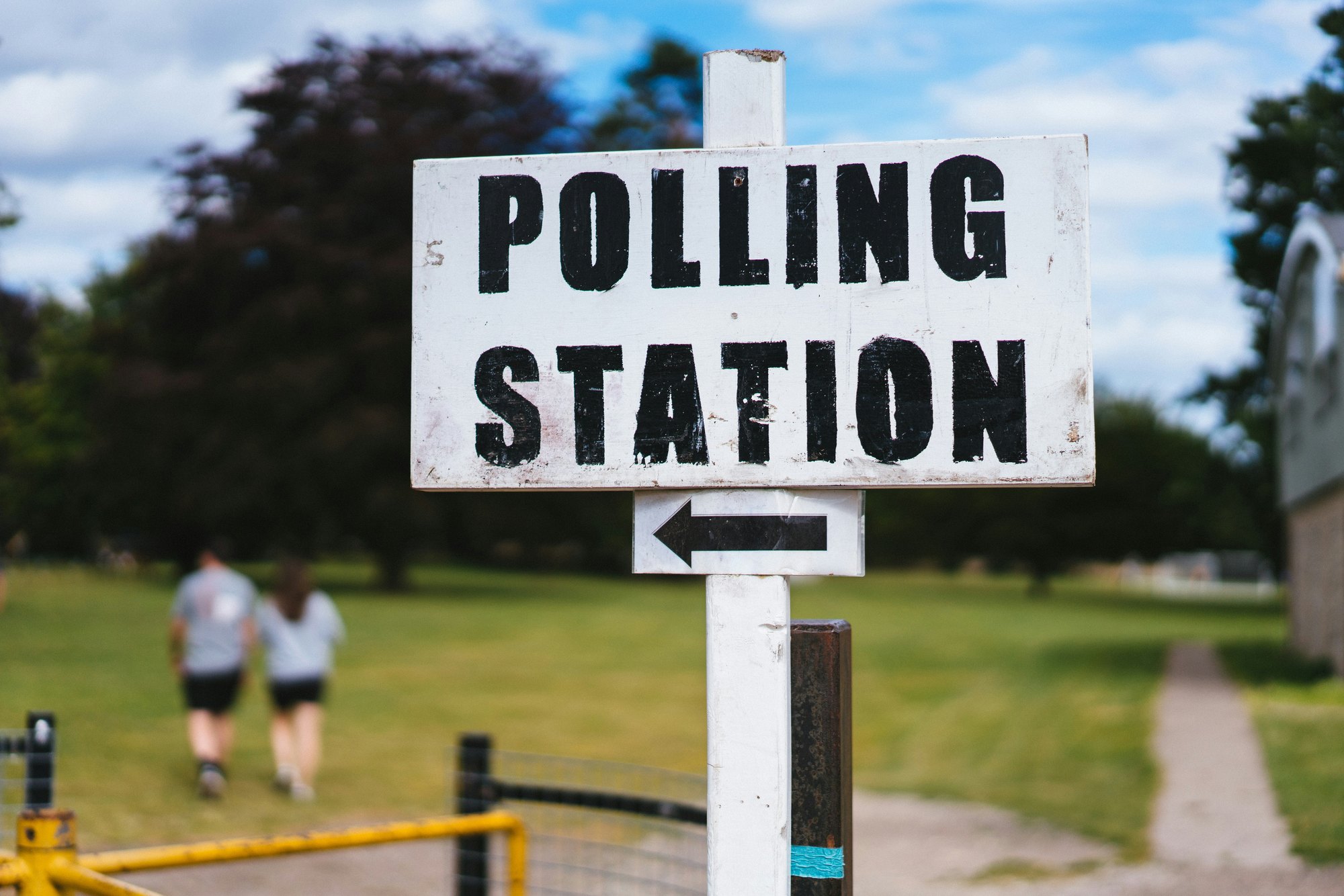
In my last blog post, I wrote about Ballot Question 2, “An Act to Protect Maine Communities by Enacting the Extreme Risk Protection Order Act.” But that won’t be the only referendum question on the ballot this November. Maine voters will also decide on Ballot Question 1, titled “An Act to Require an Individual to Present Photographic Identification for the Purpose of Voting.”
The Ballot Question
Here’s how you’ll see it on Election Day:
“Do you want to change Maine election laws to eliminate two days of absentee voting, prohibit requests for absentee ballots by phone or family members, end ongoing absentee voter status for seniors and people with disabilities, ban prepaid postage on absentee ballot return envelopes, limit the number of drop boxes, require voters to show certain photo ID before voting, and make other changes to our elections?”
— Current Citizen Initatives and People's Vetoes
The official wording is long and highlights the restrictions this law would create—fewer days for absentee voting, only one drop box per town, and new ID requirements. That framing is accurate, but some important details from the underlying bill are not included in the wording you’ll see on Election Day:
Free IDs: The bill requires the Secretary of State to provide free non-driver ID cards to eligible voters without a license.
Religious exemption: Voters with a sincere religious objection to being photographed may submit a sworn affidavit instead of a photo ID.
Challenged ballots: Voters who show up without ID are not automatically turned away. They can cast a ballot, but must return to the clerk within 4 days with proper ID for it to count.
Absentee ballot requirements: Absentee voters must now provide ID information both when requesting their ballot and again when returning it.
Supporters point to these provisions as evidence that the law is workable and fair. Opponents counter that the extra steps, paperwork, and deadlines could still make voting harder—especially for seniors, students, or low-income Mainers.
What Does This Mean in Plain Language?
If you’d like to see the full list of changes Question 1 would bring—and what would stay the same—please expand the sections below.
If passed, here's what would change
Photo ID required for in-person voting (Maine driver’s license, state ID, passport, or military/VA ID).
Voting without ID still possible, but your ballot becomes a “challenged ballot” and will only count if you present your ID to the clerk within four (4) days.
Free non-driver IDs must be provided by the Secretary of State for those without a license.
Absentee voting rules tighten:
Must provide ID number or copy both when requesting and returning the ballot.
Online requests remain available, but you must include ID information yourself; family members or third parties can no longer submit the request for you.
No phone requests allowed.
Ongoing absentee status (automatic ballots for seniors or voters with disabilities) ends.
No prepaid postage on return envelopes.
Drop boxes limited to one per town, outside the clerk’s office, with retrieval by a bipartisan team.
Third parties beyond the immediate family are not permitted to return ballots.
For reference, here’s what won’t change
You can still request an absentee ballot online, by mail, or in person, just with stricter ID requirements.
You can still return your completed absentee ballot:
By mail,
In person to the clerk’s office,
Through an immediate family member (that part is unchanged).
The deadline remains the same: ballots must be received by 8:00 p.m. on Election Day.
For those who want to read the full legal language, you can download the underlying bill in Word format from the Secretary of State’s website here.
How Supporters and Opponents See It
Like most ballot questions, Maine’s voter ID proposal has strong voices on both sides. Supporters argue it’s a commonsense step to build trust in elections and align Maine with practices elsewhere. Opponents counter that it adds barriers in a state with already high turnout and few cases of fraud.
Below is a side-by-side look at the main arguments, so you can see how each side approaches the same issues.
Topic |
Supporters say… |
Opponents say… |
|---|---|---|
| Election integrity & fraud prevention | Photo ID helps ensure “one person, one vote” and can boost confidence in results. | Impersonation fraud is already rare in Maine, so new ID rules fix a problem that barely exists. |
| Voter access & participation | Free state IDs remove cost barriers; clear rules may motivate voters to be prepared. | Extra steps (ID at request/return, four-day cure) risk discouraging eligible voters, especially newer voters. |
| Cost & administration | Uniform ID checks can simplify verification and reduce disputes at the polls. | Clerks shoulder added work (ID verification, challenged ballots, paperwork); statewide costs include free IDs, training, and outreach. |
| Absentee voting & drop boxes | Limiting drop boxes and standardizing return methods increases security and consistency. | One drop box per town and stricter return rules reduce convenience—felt most in rural areas or for those without transport. |
| Equity | Rules apply equally; free IDs and a religious-objection affidavit help avoid unfair exclusion. | Seniors, students, low-income and rural Mainers may face bigger hurdles obtaining ID or meeting new deadlines. |
| Complexity & voter confidence | Clear, consistent ID rules can reassure voters and reduce confusion about eligibility. | Longer instructions and new steps can confuse voters and deter participation at the margins. |
| Timing & implementation | A 2026 start date gives time for outreach, training, and a smooth rollout. | Small towns with limited staff may struggle to adapt quickly without significant support. |
Weighing the Debate
The arguments around Question 1 go beyond simple “for” or “against.” Supporters call photo ID a commonsense step that brings Maine in line with other states and international democracies, while opponents caution it could introduce barriers in a system that already works well. To weigh the stakes, it helps to look at the numbers and experiences—in Maine, across the U.S., and around the world.
Maine
- Turnout in 2024: ~74.2% of eligible voters, among the highest in the U.S.
- Record ballots cast: Over 842,000 ballots in 2024 (new high).
- Documented cases of voter fraud: extremely rare (a handful in the last two decades).
- Absentee ballot returns: Current law allows third-party returns (e.g., neighbors, caregivers); Question 1 would restrict this to family only.
- Cost & administration: If Question 1 passes, issuing free IDs could cost $500,000–$700,000 upfront, with $500,000–$1 million annually for poll-worker training, outreach, and clerical ID verification. These estimates are based on Maine's smaller scale compared with states like Missouri and Indiana.
United States
- Public support: About 84% of Americans (as of Oct. 2024) support photo ID requirements (up from 79% in 2022).
- 2014 GAO study: turnout dropped 1.9-2.2 percentage points in Kansas and 2.2-3.2 percentage points in Tennessee after strict ID laws—larger effects for young, minority, and newly registered voters.
- Accessibility: Reported difficulties among disabled voters fell from 26% (2012) to 11% (2020) during COVID-era expansions, then rose slightly in 2022 as temporary measures ended.
- Wisconsin (2024): 76.4% turnout under voter ID—high, with documented disenfranchisement concerns.
- Cost examples: Missouri: Fiscal notes for its voter ID law projected multi-million dollar costs in the first year (mailers, ads, DMV/admin), with continued annual expenses; Indiana: State law requires the BMV to provide free voter IDs, though detailed cost data aren't published; expenses are absorbed into agency budgets.
World
- Germany (2025): 82.5% turnout (highest since reunification); photo ID required. Every citizen must hold a Personalausweis (about €37 / ~$40 for 10 years), so there are no extra state election costs.
- Other democracies: France, Sweden, and Italy require voter ID without noticeable declines in turnout.
- UK (2024): First nationwide voter-ID use: 0.08% of in-person voters (~16,000) turned away for lacking ID; 4% of non-voters cited lack of ID as their reason.
Ultimately, the numbers show that voter ID laws can both reassure voters and create hurdles, depending on how they are designed and implemented. The question for Maine is whether these changes will build greater trust in elections—or risk discouraging participation in a state that already leads the nation in turnout.
Why It Matters in Maine
Maine consistently ranks near the top in voter participation—about 74.2% turnout in 2024, compared to 64.1% nationally—and our elections have seen very few cases of fraud. Maine’s strong track record is often cited by opponents as proof that no new restrictions are needed. They note that local clerks in smaller towns already manage elections with limited staff, and worry that added rules for absentee ballots and drop boxes could create the greatest hurdles for rural residents, older voters, and students who depend on the flexibility.
Supporters see it differently. They say Maine shouldn’t wait for problems to show up and view voter ID as a simple, commonsense step to boost confidence in the system. They also note that many other states and countries already require ID, and argue that because free IDs would be available, every eligible voter could still take part.
In the end, the decision isn’t just about showing ID at the polls—it’s about how Maine wants to balance trust and access across communities that range from Portland’s urban neighborhoods to towns of just a few hundred people.
What’s the Bottom Line?
Growing up in Germany, I was used to showing ID at the polls—it was simply part of the process, whether in a big city or a small town. Of course, working on this article piqued my curiosity, and I had to look up the most recent voter turnout data. In Germany’s most recent federal election (2025), the turnout reached 82.5%, the highest in decades, suggesting that ID rules don’t necessarily discourage participation. In the United States, turnout in 2024 was about 64%, while Maine stood out with nearly 74%, among the highest in the nation. Wisconsin, a state with strict voter ID, still recorded 76.4% turnout in 2024—evidence that high engagement can continue under such laws, though courts there also documented real cases of disenfranchisement among certain groups.
For Maine voters, the issue is really about trade-offs. A “Yes” means backing photo ID as a way to boost confidence and put the state in step with how many other places already run elections. A “No” means trusting that Maine’s system works well as it is and worrying that new rules could make voting harder without fixing an existing problem.
What This Means on Election Day
Here’s what you’ll be deciding when you fill out your ballot this November:
A Yes vote means Maine would adopt photo ID requirements and make the related changes to absentee ballots, drop boxes, and ID rules (starting in January 2026).
A No vote means Maine’s current election laws stay in place, without photo ID requirements or the new absentee ballot limits.
Share Your Thoughts
This referendum is about more than showing an ID at the polls—it’s about how Maine balances access and security in elections. Supporters see it as a step toward stronger trust and alignment with national norms. Opponents see it as a solution in search of a problem, one that may add barriers in a state with already high participation.
What do you think?
Would Question 1 increase your confidence in Maine’s elections?
Or are there other changes you’d like to see to strengthen both trust and access?
Resources (links open in a new tab)
Maine.gove - Current Citizen Initiatives and People’s Vetoes https://www.maine.gov/sos/elections-voting/peoples-veto-or-citizens-initiative-resources/current-citizen-initiatives-and-peoples-vetoes
An Act to Require an Individual to Present Photographic Identification for the Purpose of Voting https://www.maine.gov/sos/sites/maine.gov.sos/files/content/assets/Photo-20ID-20for-20Voting-20FINAL.docx
Maine Legislature - §753-B. Procedure for issuing absentee ballot https://www.mainelegislature.org/legis/statutes/21-a/title21-Asec753-B.html
Voter fraud in Maine is a nonissue | Letter https://www.centralmaine.com/2025/08/07/voter-fraud-in-maine-is-a-nonissue-letter/
Voter fraud in Maine via heritage.org (search for ‘State = Maine’) https://electionfraud.heritage.org/search
Investigation clears voters accused of double voting by Maine GOP https://wgme.com/news/local/investigation-clears-voters-accused-of-double-voting-by-maine-gop-republicans-secretary-state-office-shenna-bellows-voter-fraud-election-integrity-investigation
Ballotpedia - Voter turnout in Maine https://ballotpedia.org/Voter_turnout_in_Maine
Ballotpedia - Voter turnout in Wisconsin https://ballotpedia.org/Voter_turnout_in_Wisconsin
Ballotpedia - Voter turnout in the U.S. https://ballotpedia.org/Election_results,_2024:_Analysis_of_voter_turnout_in_the_2024_general_election
Maine voter turnout this year surpassed previous record high https://mainemorningstar.com/2024/11/27/maine-voter-turnout-this-year-surpassed-previous-record-high
League of Women Voters - Voter ID referendum is unnecessary, expensive, and harmful to Maine voters https://www.lwvme.org/node/3408
Voter ID at the 2024 UK general election https://www.electoralcommission.org.uk/research-reports-and-data/our-reports-and-data-past-elections-and-referendums/voter-id-2024-uk-general-election
Electoral Commission calls for improvements to voter ID (UK content) https://www.electoralcommission.org.uk/media-centre/electoral-commission-calls-improvements-voter-id-accessibility
ECRE - Germany: Federal Election 2025 https://ecre.org/germany-federal-election-2025/
TIME - Mail Voting Boosted Turnout for Voters With Disabilities. Will Lawmakers Let It Continue? https://time.com/5940397/2020-mail-voting-accessibility/
The Texas Tribune - Texas’ Voter ID Defense Has Cost $3.5 Million https://www.texastribune.org/2016/06/17/texas-tab-voter-id-lawsuits-more-35-million
Missouri Senate - Committee on Legislative Research Oversight Division ‘Subject: Elections’ https://senate.mo.gov/FiscalNotes/2016-1/4554-18T.ORG.PDF
Federal Ministry of the Interior - German ID Card > Fees and Validity https://www.personalausweisportal.de/Webs/PA/EN/citizens/german-id-card/fees-and-validity/fees-and-validity-node.html
Gallup - Americans Endorse Both Early Voting and Voter Verification https://news.gallup.com/poll/652523/americans-endorse-early-voting-voter-verification.aspx
Gallup - Eight in 10 Americans Favor Early Voting, Photo ID Laws https://news.gallup.com/poll/403052/eight-americans-favor-early-voting-photo-laws.aspx
GAO.gov - Issues Related to State Voter Identification Laws https://www.gao.gov/assets/gao-14-634.pdf
The Guardian - Voter ID has a role to play in free and fair elections https://www.theguardian.com/politics/article/2024/may/06/voter-id-has-a-role-to-play-in-free-and-fair-elections
Wikipedia - Electoral abstention in France https://en.wikipedia.org/wiki/Electoral_abstention_in_France
Wikipedia - Results of the 2022 Italian general election https://en.wikipedia.org/wiki/Results_of_the_2022_Italian_general_election
For the states that had a decline in voter turnout after voter ID laws were passed, couldn’t that be a result of fraudulent voters not casting ballots?
Also for people who state that ID is unfair to low income people. Doesn’t government public assistance require ID.
As too it being confusing I would think having a year to figure out if any changes relate to your situation should make the “I didn’t know” complaint weak.
Thanks for sharing your perspective. You raise points that often come up in this debate, and I wonder about them myself.
On turnout: Studies like the GAO report on Kansas and Tennessee don’t show why turnout declined, only that it did, and disproportionately among certain groups. Supporters might argue that this could reflect fewer ineligible voters, while opponents see it as eligible voters being discouraged by new steps. Additionally, the study showed that the IDs of some individuals had expired. This ties into your statement on ‘time to adjust,’ as it’s crucial to stay on top of ID renewals.
On ID and low-income voters: It’s true that many forms of assistance require ID, but not everyone eligible to vote is enrolled in those programs. Opponents point to people who are low-income, elderly, or rural who may not have current IDs or easy access to get one, even if free. Unfortunately, I could not find any data that shows how many registered voters (or Maine citizens, for that matter) do not have an ID. Looking at the BMV’s 2024 data (https://www.maine.gov/sos/sites/maine.gov.sos/files/inline-files/Lic24.pdf), about 1,088,907 Mainers held a driver’s license, while the Secretary of State reports 1,040,701 active status voters as of January 1, 2025 (https://legislature.maine.gov/doc/11362). Of course, not every license holder is eligible to vote (for example, some may be under 18 or non-citizens), but these figures suggest that the large majority of active voters already possess a form of ID.
On time to adjust: Supporters agree with you! They note the law wouldn’t take effect until 2026, which gives time for voter education. Those in opposition worry that awareness campaigns may not reach everyone equally, especially in small towns with limited resources. The ‘Maine Citizen’s Guide to the Referendum Election’ for 2025 (https://www.maine.gov/sos/sites/maine.gov.sos/files/inline-files/MaineCitizensGuide2025.pdf) budgets an estimated $600,000 for a TV and media campaign to inform the public, so there are plans for outreach. Local, citizen-driven efforts could help fill gaps.
That’s why the debate feels so heated: the same facts can be read in very different ways, and important data (like how many eligible voters lack ID) doesn’t seem to be available. Ultimately, Mainers will decide whether the priority should be stronger security or easier access.
It is simply common sense to ask for a voter ID in order to vote. You can still get Absentee ballots, still have the handicap vote and you are able to close some loopholes that no matter how small can affect a vote. I am definitely voting for 'common sense'. Joyce
Thanks for sharing your perspective. Many supporters of Question 1 frame voter ID as common sense for the reasons you mention—consistency and closing loopholes, ultimately strengthening confidence.
Opponents may agree that security matters, but they worry the new rules around absentee voting and ID steps could create barriers for seniors, students, or rural voters. It would be helpful for all voters if we had information about how many active registered voters have a valid ID, but, unfortunately, I'm not aware of such a data point and can only make assumptions based on available 2024 data from the BMV and SoS.
That’s why this referendum is so important—it gives Mainers the chance to decide which priority matters more: tightening security or keeping access as simple as possible.
I think the new requirements if passed would add more security and credibility to elections. It has been said that there is no need for the changes because of very few fraud cases and would make the process more restrictive to certain people in voting and getting absentee ballots. but why "close the door after the horse gets out " as the saying goes. Why wait ? I wholeheartedly support this change and am going to vote Yes.
I appreciate you sharing your perspective! You’re definitely not alone in asking the question “Why wait?” and thinking that adding voter ID now could strengthen credibility and prevent problems before they occur.
What you fail to consider is that the proponents could have simply offered a voter ID law that did not change absentee voter rules, reduce the number of early voting days, and otherwise make it harder for seniors, people with disabilities, people who work long shifts, etc. But they didn't. This is a voter suppression law wrapped up in a voter ID cloak. Also, the number of documented voter fraud cases in Maine is 2 since 1982. We can debate whether or not requiring voter IDs is right for Maine but I'm against this bill because its other vote limiting aspects. Vote no on Question 1!
Thank you for sharing your perspective! You brought up an important point: how bundling multiple changes into one measure can affect how someone weighs their vote, potentially leading to a voter casting a vote against a measure even though they might agree with some of its parts.
Just to clarify, my aim with the article was to provide information about what's in the referrendum question, what's been left out, what changes, what doesn't change, how supporter and opponents view it, and what data from other states and countries show when it comes to Voter ID, so voters can see the full picture before making a decision.